A recent interview with podcast Relevant Tones, where Shiva Feshareki and I discuss the research and work that went into the 2018 world premiere of Daphne Oram’s Still Point at the BBC Proms, is now accessible online here. Thank you to composer and broadcaster Seth Boustead for this.
Read More'Still Point' article in FACT
Read More"The success of the performance at St John’s Smith Square is palpable, and Feshareki and Bulley’s achievement is huge, but whether ‘Still Point’ becomes canonical is anyone’s guess. The material is certainly there – the duo have been meticulous in their documentation, collating notation, Oram’s and Davies’ writing and orchestral instruction onto a single score – but it remains singular, without clear successors. The muffled, hypnagogic records of Indignant Senility or The Caretaker might be the closest in actual sound, but certainly not in spirit. Both have incorporated repurposed and anaesthetised classical passages in their music – Wagner for the former, myriad Romantic piano pieces for the latter – but these are used for textural and nostalgic effect. Oram’s score, on the other hand, was entirely original, and her specific manipulations tied into a loftier artistic ethos.
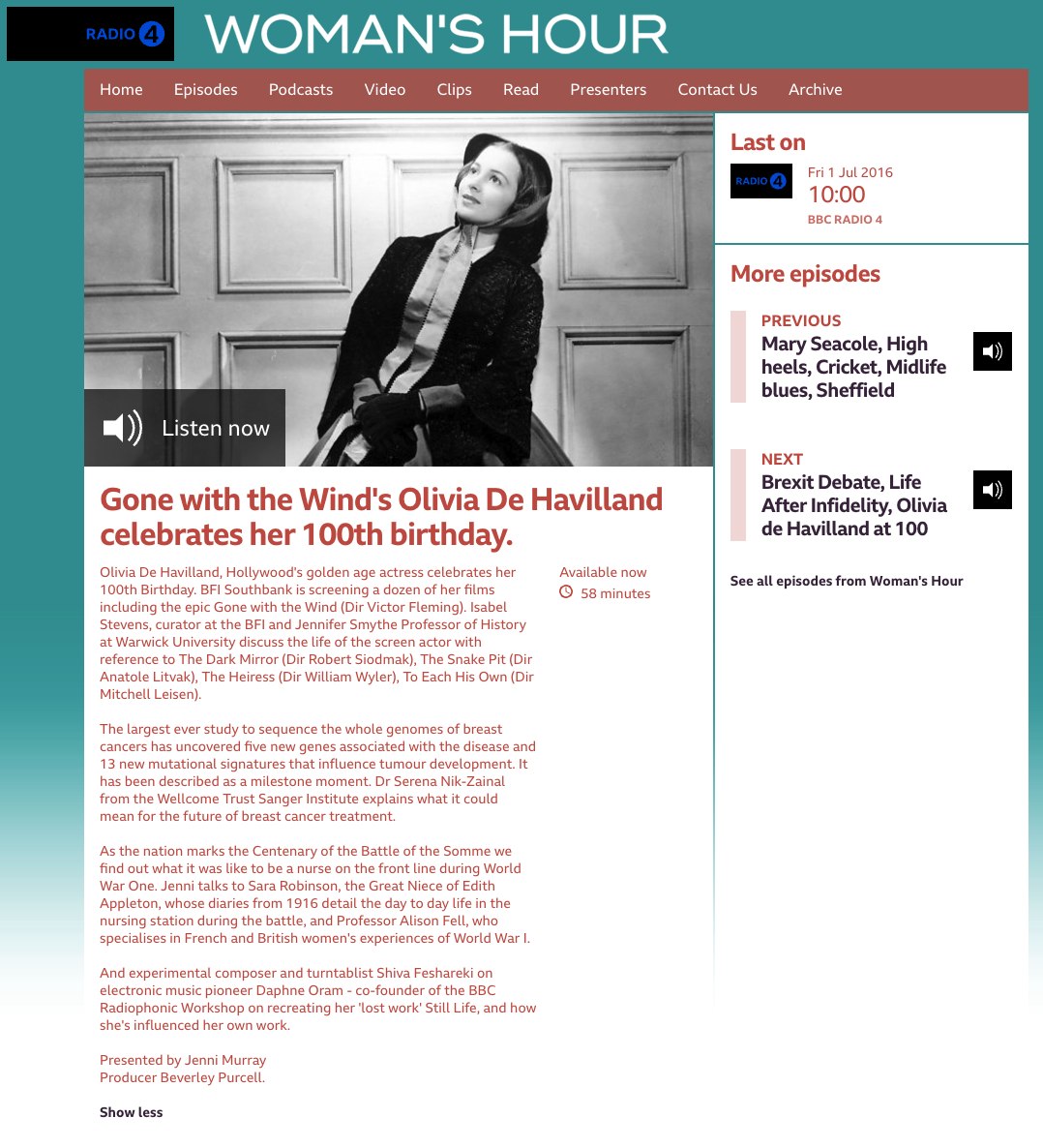
'Still Point' on BBC Woman's Hour
Shiva Feshareki and I’s work on Daphne Oram’s extraordinary composition Still Point was featured on Woman’s Hour on BBC Radio 4 today: https://www.bbc.co.uk/programmes/b07h2vns
'The Original Turntablist' - Daphne Oram by Shiva Feshareki
Daphne Oram, courtesy of Oram Trust and Fred Wood
"I then noticed a small, hand written piece of paper written by Oram which stated “Still Point: For Double Orchestra, Microphones and Three pre-recorded 78 RPM discs (1949)” and I was stunned to realise this piece was for turntables and orchestra! It is likely that had it been performed in 1949, it would have transformed the development of electroacoustic music as we know it today.
At the moment, it is a stand-alone piece, that doesn’t fit into any known medium of the time. For me, it was particularly stunning, as my compositional practice is centred around concert music for turntables and orchestra, and I have always seen the turntable as a classical instrument. All of a sudden, the way I had developed my turntabling practice for the past decade, made sense to me. It all felt very surreal and destined."
Read the full article here